
Forklift Training at Omega Business Park, Warrington
GH Training provides practical, AITT-accredited forklift and material handling equipment training for businesses at Omega Business Park.
Courses are delivered at your premises, allowing operators to train with the equipment, loads and warehouse conditions relevant to their normal duties.
Call 01925 500796
Training for Large Warehouse Operations
Omega is a major manufacturing and logistics development beside Junction 8 of the M62, with extensive warehouses, distribution facilities and service yards.
Material handling operations at large sites may involve:
- High volumes of inbound and outbound stock
- Multiple dock and level-access doors
- Articulated vehicles and trailers
- Large marshalling areas
- High-bay warehouse racking
- Separate goods-in and dispatch teams
- Powered pallet trucks and stock pickers
- Battery charging areas
- Shift changes
- Agency and seasonal workers
- Visiting drivers and contractors
- Extensive pedestrian and vehicle routes
On-site training helps relate practical instruction to the equipment and conditions found at the individual workplace.


Counterbalance Training for Loading Operations
Counterbalance forklifts may be used to unload incoming vehicles, move stock through marshalling areas and prepare outbound loads.
Training can cover:
- Pre-use inspections
- Controls and instruments
- Equipment stability
- Steering and manoeuvring
- Load assessment
- Stacking and de-stacking
- Trailer loading and unloading
- Working around loading bays
- Pedestrian awareness
- Safe parking and securing
- Defect reporting
Courses are available for novice, experienced, conversion and refresher operators.
View Counterbalance Forklift Training
Working Around Loading Docks
Loading-dock operations require suitable coordination between warehouse teams, forklift operators and vehicle drivers.
Before loading or unloading begins, the workplace procedure may need to confirm:
- The vehicle is correctly positioned
- Trailer brakes or restraints are applied
- The driver is in an agreed safe location
- Dock plates or levellers are suitable and correctly positioned
- The trailer floor can support the equipment and load
- Pedestrians are excluded
- The loading area has adequate lighting
- The trailer cannot depart unexpectedly
- Damaged trailers or equipment are reported
- Communication arrangements are understood
The precise controls depend on the vehicle, trailer, dock design, equipment and workplace risk assessment.
Operator training does not replace the employer’s responsibility to provide and enforce a safe loading system.
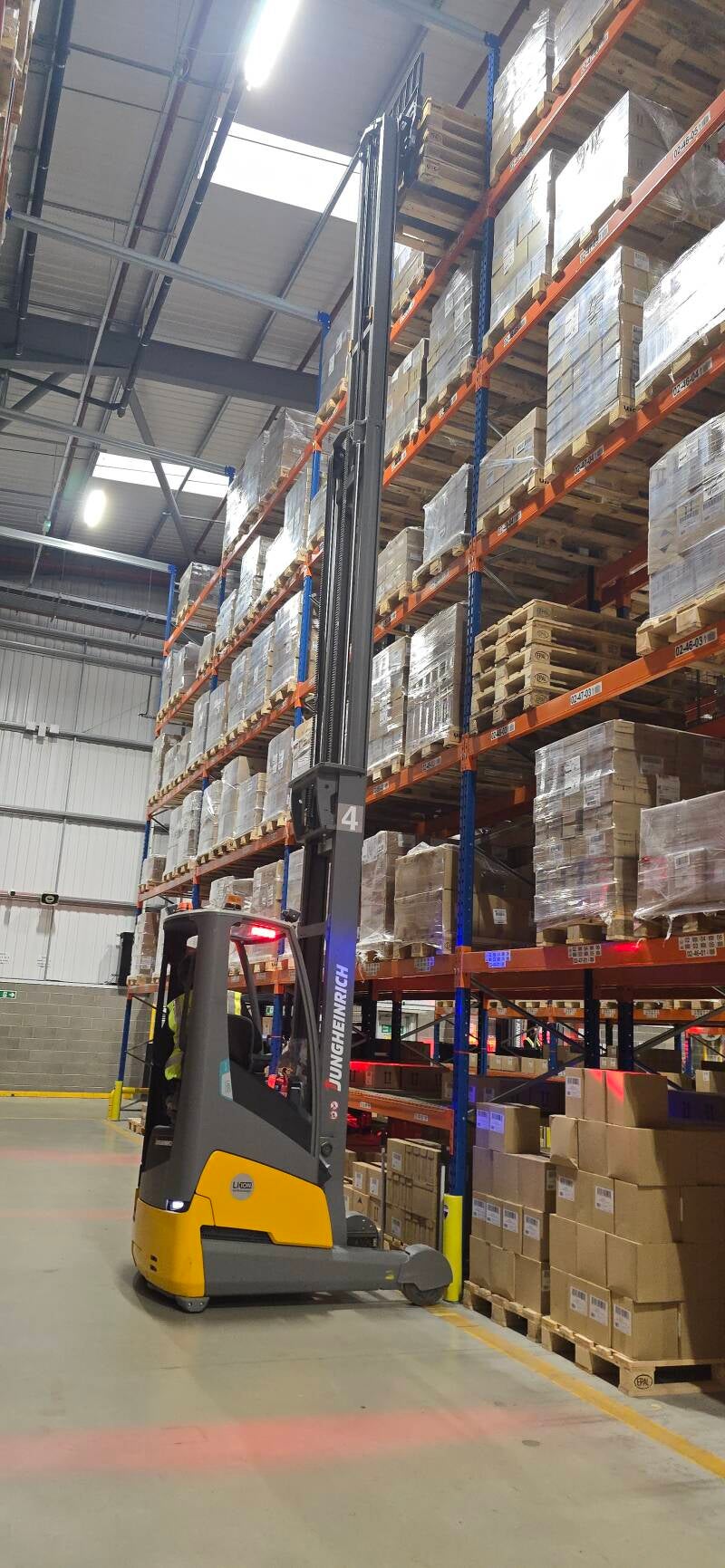
Reach Truck Training for High-Bay Warehousing
Reach trucks are commonly used for pallet placement and retrieval within warehouse racking.
Training can include:
- Equipment checks
- Safe warehouse travel
- Steering characteristics
- Load assessment
- Racking clearance
- Pallet placement and retrieval
- Stacking at height
- Battery care and charging
- Practical assessment
Operators require suitable reach truck training even if they already have evidence of counterbalance training.
Pivot Steer Forklift Training
Articulated Flexi and Bendi-type forklifts may be used in narrow-aisle storage environments.
Courses address their particular steering characteristics, safe travel, load handling and operation around racking.
View Pivot Steer Forklift Training
Powered Pallet Truck Training
Powered pallet trucks may be used to transfer goods between receiving, storage, picking, packing and dispatch areas.
Training is available for relevant pedestrian and rider-operated equipment categories.
Instruction may include:
- Pre-use inspections
- Controls and stopping
- Safe travel
- Load assessment
- Working on loading areas
- Pedestrian awareness
- Parking and charging
- Practical assessment
View Pedestrian Pallet Truck Training
Vertical Stock Picker Training
Vertical stock pickers may be used for order preparation and replenishment within warehouse operations.
Operators require suitable training for the equipment and any associated working-at-height risks.
View Vertical Stock Picker Training
Training Seasonal and Agency Workers
Distribution workloads can change during peak retail, promotional or seasonal periods.
Before allowing a temporary or agency worker to operate equipment, the employer should establish:
- Which equipment category they were trained on
- Whether training evidence is available
- How recent their operating experience is
- Whether their experience is suitable for the intended work
- Whether they understand the site’s rules
- Whether workplace familiarisation is required
- Whether formal authorisation has been issued
A certificate from another employer does not automatically demonstrate competence on different equipment or at an unfamiliar workplace.
Where previous experience cannot be confirmed, the operator should be placed on an appropriate course rather than assumed competent.
Complete the Free Training Gap Check
Maintaining Standards Between Shifts
Large distribution operations may run early, late, night or rotating shifts.
Employers should ensure that operators on every shift follow consistent procedures for:
- Pre-use inspections
- Defect reporting
- Loading and unloading
- Warehouse travel
- Pedestrian controls
- Battery charging
- Parking equipment
- Shift handovers
- Reporting damaged stock or racking
- Responding to incidents
Formal training should be supported by suitable supervoverhead-gantry-crane-trainingision and ongoing monitoring.
Battery Charging and Parking Areas
Electric warehouse equipment should be parked and charged in designated locations following the manufacturer’s instructions and site procedures.
Operators may need to understand:
- Approved parking positions
- Correct shutdown procedures
- Charging connections
- Cable condition
- Ventilation requirements
- Emergency arrangements
- Restrictions on smoking or ignition sources
- Reporting damaged batteries or chargers
- Keeping access routes clear
Specialist maintenance should only be undertaken by authorised personnel.
Multidirectional Forklift Training
Manufacturing or construction-supply operations may use multidirectional equipment to handle long or bulky materials.
Training can be planned around the equipment, attachments, typical loads and available operating space at the workplace.
View Multidirectional Forklift Training
Additional MHE and Workplace Courses
Omega businesses can also enquire about:
- MEWP training
- Overhead gantry crane training
- Slinger signaller training
- Managing and supervising MHE
- Working at height awareness
- Risk assessment and method statement awareness
Choosing the Correct Course
Course selection should reflect the operator’s genuine experience, formal training history and equipment category.
- Novice training: For employees without previous formal training or practical experience.
- Experienced operator training: For suitable employees with substantial genuine experience but no recognised evidence of training.
- Conversion training: For trained operators moving to another equipment category or significantly different type.
- Refresher training: For previously trained operators requiring reassessment or updated instruction.
An experienced operator course should not be used as a shortened alternative for an inexperienced employee.
View Experienced Operator Training
View Forklift Conversion Training
View Forklift Refresher Training
Preparing Your Omega Workplace
For training at your premises, the employer will normally need to provide:
- Safe and serviceable equipment
- Manufacturer operating instructions
- A controlled practical training area
- Representative pallets or loads
- Relevant attachment documentation
- Appropriate personal protective equipment
- Sufficient access to the equipment
- Time and space for practical assessment
Training should not compete with normal warehouse operations for access to the equipment or practical area.
Vehicle movements and other work may need to be separated while exercises and assessments are underway.
Assessment and Employer Authorisation
Courses include relevant theory, practical instruction and operator assessment.
Successful candidates receive suitable evidence of training for the equipment category assessed. Employers remain responsible for:
- Workplace familiarisation
- Job-specific instruction
- Formal operator authorisation
- Ongoing supervision
- Monitoring operator performance
A certificate should not be treated as an unrestricted forklift licence covering every equipment category or workplace.
Read the Forklift Employer Responsibilities Guide
Omega and Warrington Coverage
GH Training supports businesses at Omega and throughout Warrington.
Training is also available in nearby Birchwood, Widnes, Runcorn and Haydock.
View Forklift Training Across Cheshire
Arrange Forklift Training at Omega
Tell us which equipment your employees use, how many operators require training, their previous experience and the shifts or dates involved.
We will recommend an appropriate course and provide a tailored quotation.
Call 01925 500796